From Blank Pages to Young Voices
How four artist-led workshops created space for young people to explore identity, aspirations and self-expression through creative work.
What happened
Voices on Paper ran as a completed four-week project, supported by Arts Council of Wales Creative Communities funding. Four artist-led workshops, two hours each, built around four themes: My Story, Imagine My Future, My Personal Crest and My Mark.
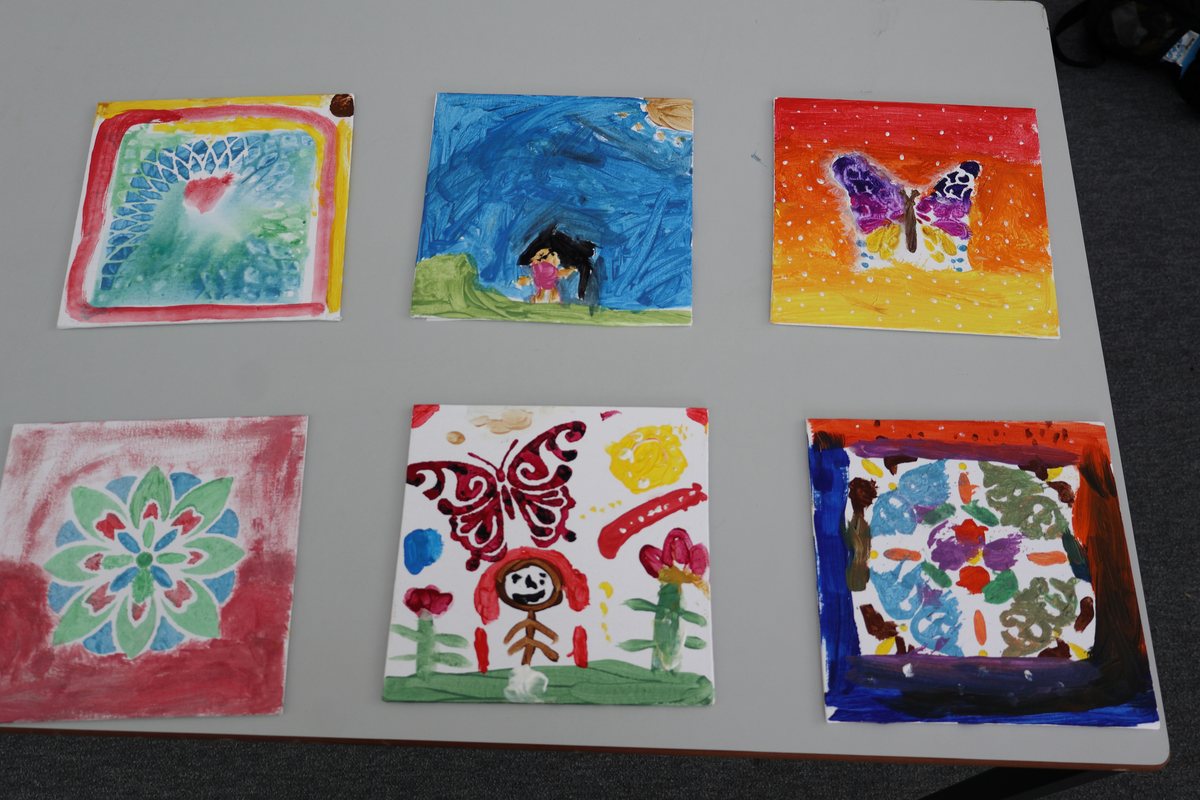
Each workshop started from a prompt rather than a blank page. Young people worked alongside an artist on their own piece, and what they made was theirs to keep. Nobody was asked to explain anything they did not want to explain.
Our records show nineteen participant attendances across the four workshops. Five young people registered in advance, and others took part without registering. That gap is normal in open creative sessions, and it is why registrations and participation are counted separately throughout this story.
Why we did it
Benzone works in the space before difficulties become serious. Creative work is one of the few settings where a young person can say something about who they are, or who they would like to become, without being asked a direct question about it.
Voices on Paper was designed to make that possible: a working artist, proper materials, and four prompts that open onto identity, aspiration and self-expression without requiring anyone to disclose anything.
The funding mattered practically. It paid an artist properly and put materials in front of participants that were good enough to say the work was worth doing.
What participants experienced
Young people produced individual creative pieces across all four themes. The finished work was the point rather than a by-product, and each session ended with something completed.
Attendance varied between the four workshops. We record attendances rather than a single participant total because the names across those sessions have not yet been reconciled, and publishing a unique-participant figure before that would be an estimate presented as a count.
We did not collect structured outcome data from these workshops. What we can describe is what took place and what was made. What we cannot describe is what it changed for any individual, and we are not going to imply otherwise.
-
4
Artist-led workshops
Two hours each, delivered as a completed four-week project.
-
19
Participant attendances
Workshop attendance records. Attendances across the four workshops, not unique participants.
-
5
Registered in advance
Registration records. Others attended without registering, so this is not a reach figure.
What we learned
Creative sessions reach people who would not come to something described as a wellbeing programme. Several participants came because the activity looked interesting, not because of anything Benzone said about the benefit of taking part.
Open sessions are harder to count. Registration is useful for planning and it is not a reliable measure of who actually turned up. The gap between the two is a finding about how young people reach us, not an administrative nuisance.
Paying an artist changes the room. The standard of facilitation was the thing participants responded to most visibly, and it is not the part to economise on.
What happens next
The Arts Council of Wales Creative Communities funding covered this four-week project. It does not fund future editions, and we will not describe it as though it does.
Voices on Paper continues as a Benzone concept, and we are looking for the funding to run it again. Meanwhile the themes and the format are being carried into Catch Them Young sessions where they fit.
Before any future edition publishes a participant total, we will reconcile the attendance names across sessions so that the figure means what it says.
THE PROGRAMME BEHIND THIS STORY
Voices on Paper
More stories
-
CATCH THEM YOUNG
Building More Than a Saturday Programme
What Catch Them Young is teaching us about participation, confidence, connection, recruitment and giving young...
-
MOVE. THINK. CONNECT.
When Being Active Doesn't Have to Feel Like Sport
What we're learning from bringing movement, thinking games and social connection into community settings.