Building More Than a Saturday Programme
What Catch Them Young is teaching us about participation, confidence, connection, recruitment and giving young people reasons to return.
What happened
Catch Them Young runs on Saturdays. Twenty-seven sessions are recorded between May and September 2026, across movement, creative activity, games and group work.
More than thirty young people have taken part. Sixteen registered and attended at least once, and roughly sixteen more attended without registering, particularly during the Summer Challenge. That is why the public figure is 30+ rather than an exact number: the names have not been reconciled, and a precise total would be false precision.
Attendance varied. Some sessions were busy and some were quiet. Both are in the record, because a programme that reports only its good weeks is not reporting.
Why we did it
A great deal of provision begins once something has already gone wrong. Benzone works earlier than that.
A Saturday programme is a low-stakes way in. There is no referral, no assessment and no label attached to turning up. A young person can come because a friend is going.
The design assumption was that if the sessions were good, young people would come. That assumption turned out to be incomplete, and most of what follows is about why.
What participants experienced
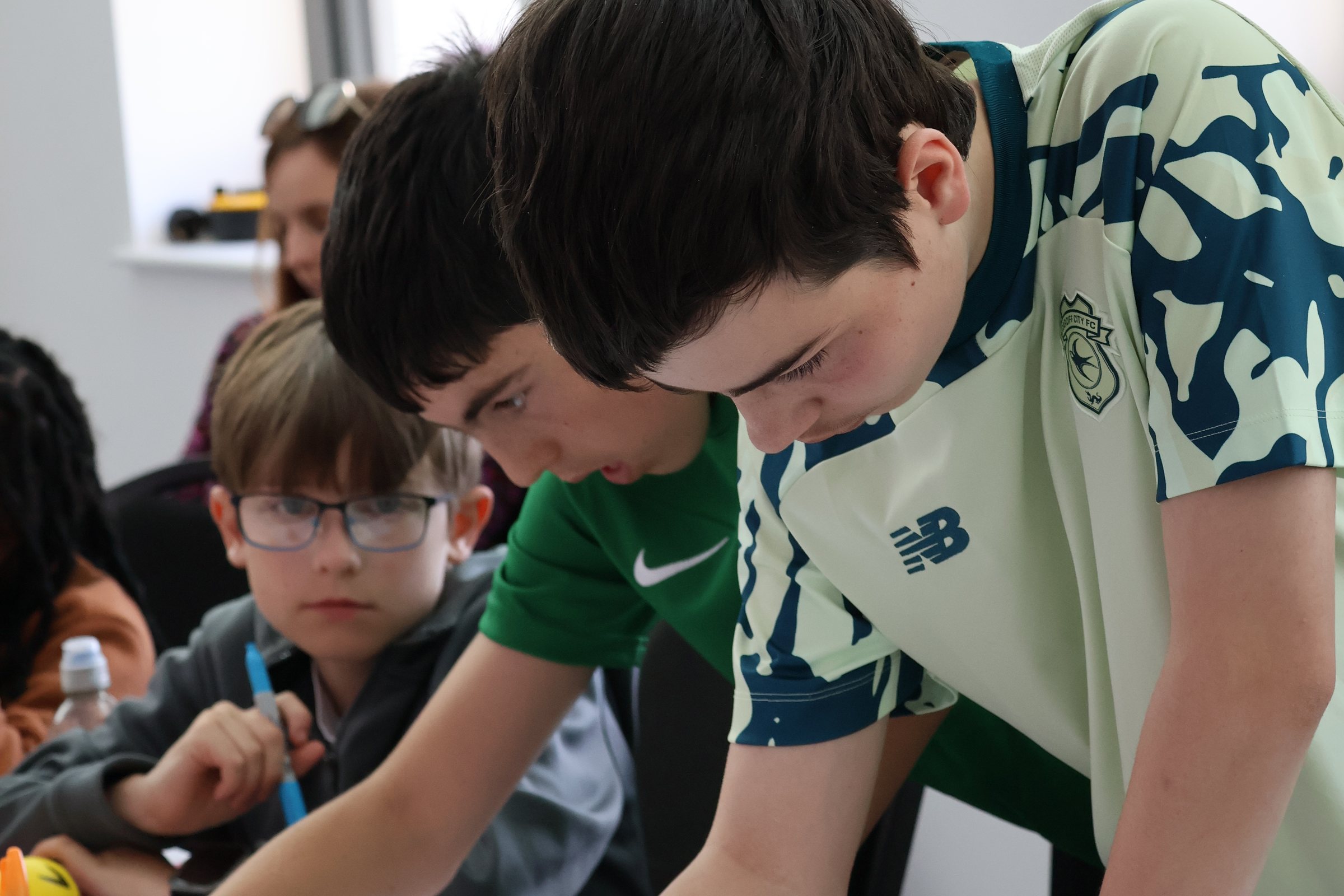
Young people took part in movement activities, creative work, games and group challenges. Nine are currently evidenced as returning for more than one session.
Returning is the most useful thing we measure at the moment. It is behaviour rather than opinion, and a young person who comes back has made a judgement about the session that no feedback form collects as reliably.
We are not claiming measured improvements in confidence or wellbeing. We have not gathered the outcome evidence that would support that claim, and saying it anyway would put a number on something nobody counted.
-
27
Sessions recorded
Programme delivery records, May to September 2026.
-
30+
Young people participated
Registration and attendance records. Stated as 30+ while the unregistered attendance figure is reconciled.
-
16
Registered and attended
Registration and attendance records. Registrations and participation are counted separately.
-
9
Returned more than once
Attendance records. More than one session, not necessarily every session.
What we learned
Programme quality on its own does not fill a room. The sessions that ran best were not always the sessions that were best attended, and the difference was usually about how a young person heard about it rather than what happened once they arrived.
Trust and referral do more than advertising. Young people came because a parent knew someone, a teacher mentioned it, or a friend was already going.
Parent communication is part of delivery, not administration. A parent who does not know what a session involves, where it is, or what time it finishes has a good reason not to send their child.
The route in has to be easy. A registration form that assumes an adult is filling it in excludes the young person who is actually interested, and that is now fixed.
Reasons to return matter more than one strong first session. Nine returning participants out of more than thirty is the number we are working on.
What happens next
Cohort 2 starts on Saturday 26 September 2026 and runs for twelve weeks. It is built around the learning above: earlier and clearer communication with parents and carers, a registration route a young person can use themselves, and a structure that gives people a reason to come back rather than a single good day.
We are reconciling the attendance records so that the next time we publish a participation figure it can be exact rather than 30+.
Confidence and connection are what this programme is designed to support. Measuring them properly is a separate piece of work, and we would rather do it late than claim it early.
THE PROGRAMME BEHIND THIS STORY
Catch Them Young
More stories
-
VOICES ON PAPER
From Blank Pages to Young Voices
How four artist-led workshops created space for young people to explore identity, aspirations and self-express...
-
MOVE. THINK. CONNECT.
When Being Active Doesn't Have to Feel Like Sport
What we're learning from bringing movement, thinking games and social connection into community settings.